Breaking Down AI Agent Development Cost: Your All-in-One Guide
By 2025, an estimated 85% of companies will be using AI agents—many Fortune 500s already rely on AI to cut costs, streamline operations, and transform customer

By 2025, an estimated 85% of companies will be using AI agents—many Fortune 500s already rely on AI to cut costs, streamline operations, and transform customer
By 2025, an estimated 85% of companies will be using AI agents—many Fortune 500s already rely on AI to cut costs, streamline operations, and transform customer engagement. But what does it actually cost to build one—and how fast does it pay off? The AI agent development journey often stalls at the proof-of-concept stage due to unclear or incomplete cost estimates. Underestimating ongoing operational expenses can lead to budget overruns and project delays, turning great ideas into guesswork.
This guide delivers the answers: clear pricing breakdowns on agentic AI development, real ROI examples, and cost-saving strategies to help you plan smartly and move fast.
What’s the ROI on AI Agents?
AI agent development isn't just a tech investment—it’s a revenue unlock. Here's what some businesses are already seeing:
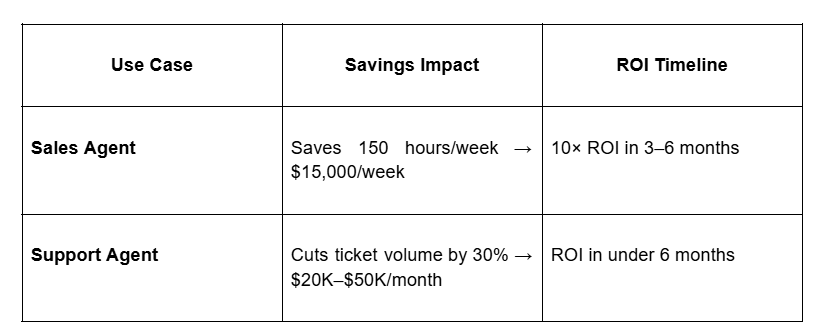
That $150K development cost? It can pay for itself in months—while delivering long-term productivity, customer satisfaction, and compliance benefits.
What Is an AI Agent?
An AI agent is a software program that can perceive its environment, make decisions, and act autonomously. Think of it as a digital employee that automates repetitive tasks, responds to queries, or coordinates systems—without needing constant human input.
Types of AI Agents
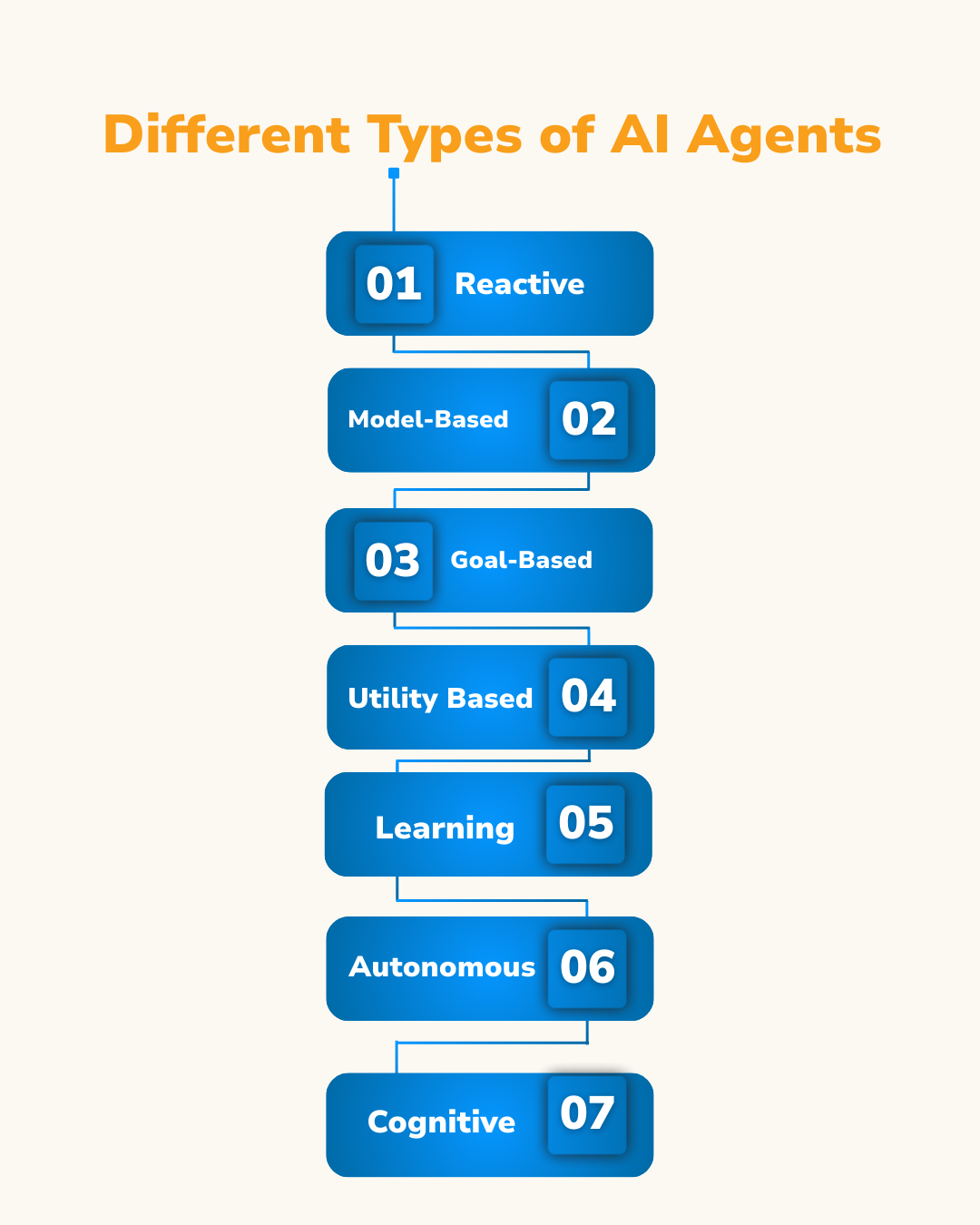
Different AI agents suit different needs and budgets. Here’s a simplified breakdown:
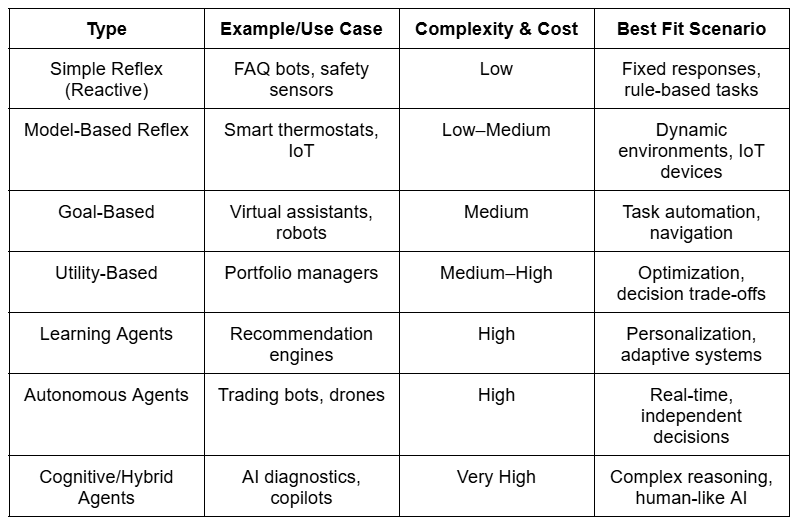
Note: Most businesses start with reflex or goal-based agents. Cognitive agents are suited for enterprises with mature AI infrastructure and high-stakes decision-making.
AI Agents and What They Cost
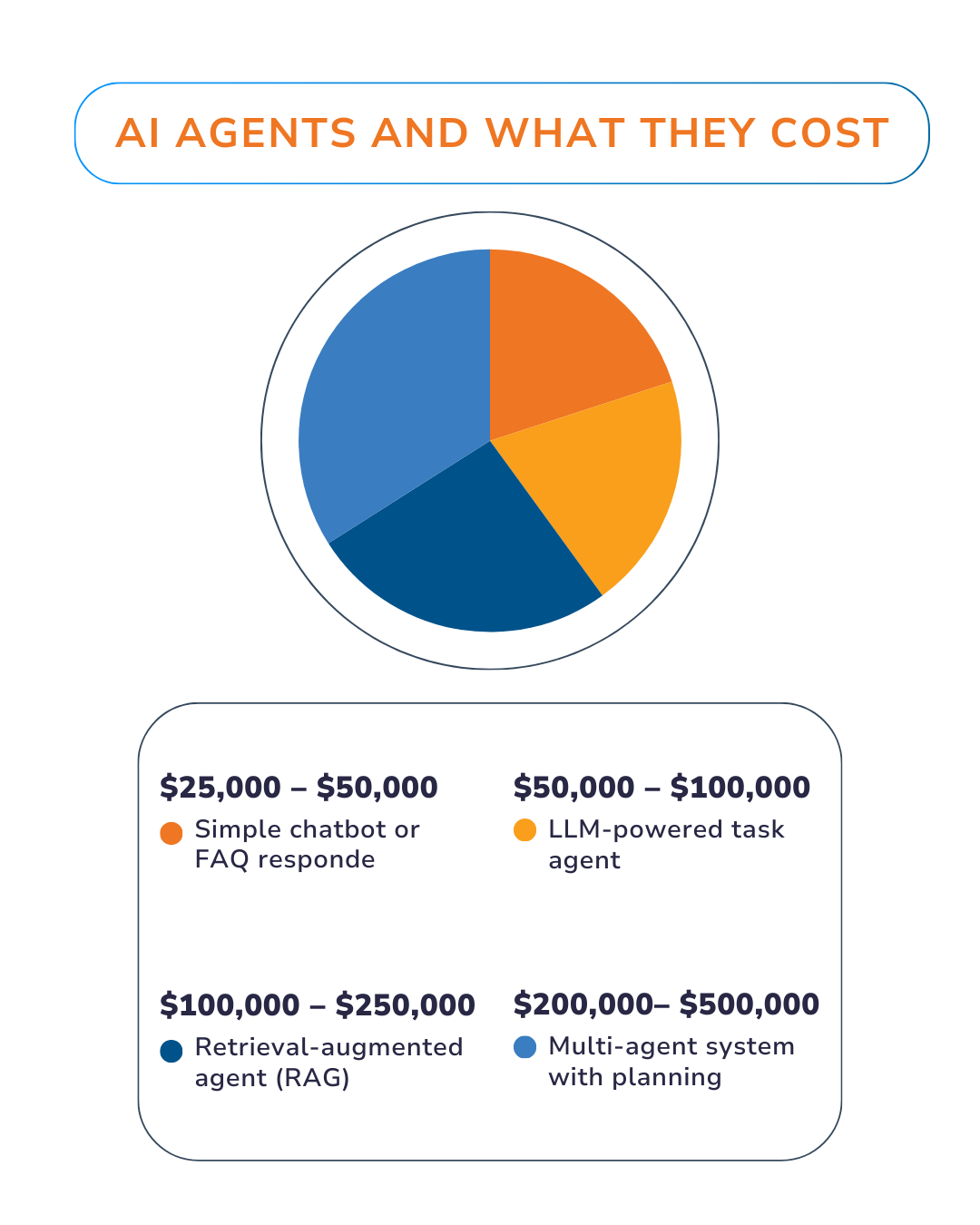
Here's a consolidated view of what typical AI agents cost—and what you get at each level:
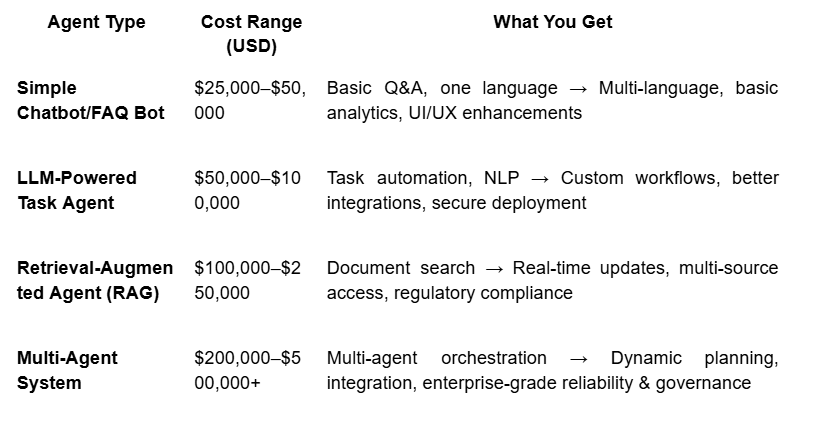
Hidden Costs to Expect: Integration with legacy tools, DevOps setup, ongoing compliance updates, and cloud hosting can add 20–40% to initial estimates.
Example: Where the Time (and Cost) Goes
Building a RAG agent for internal ops—fetching Salesforce/Jira data, answering questions, and generating reports.
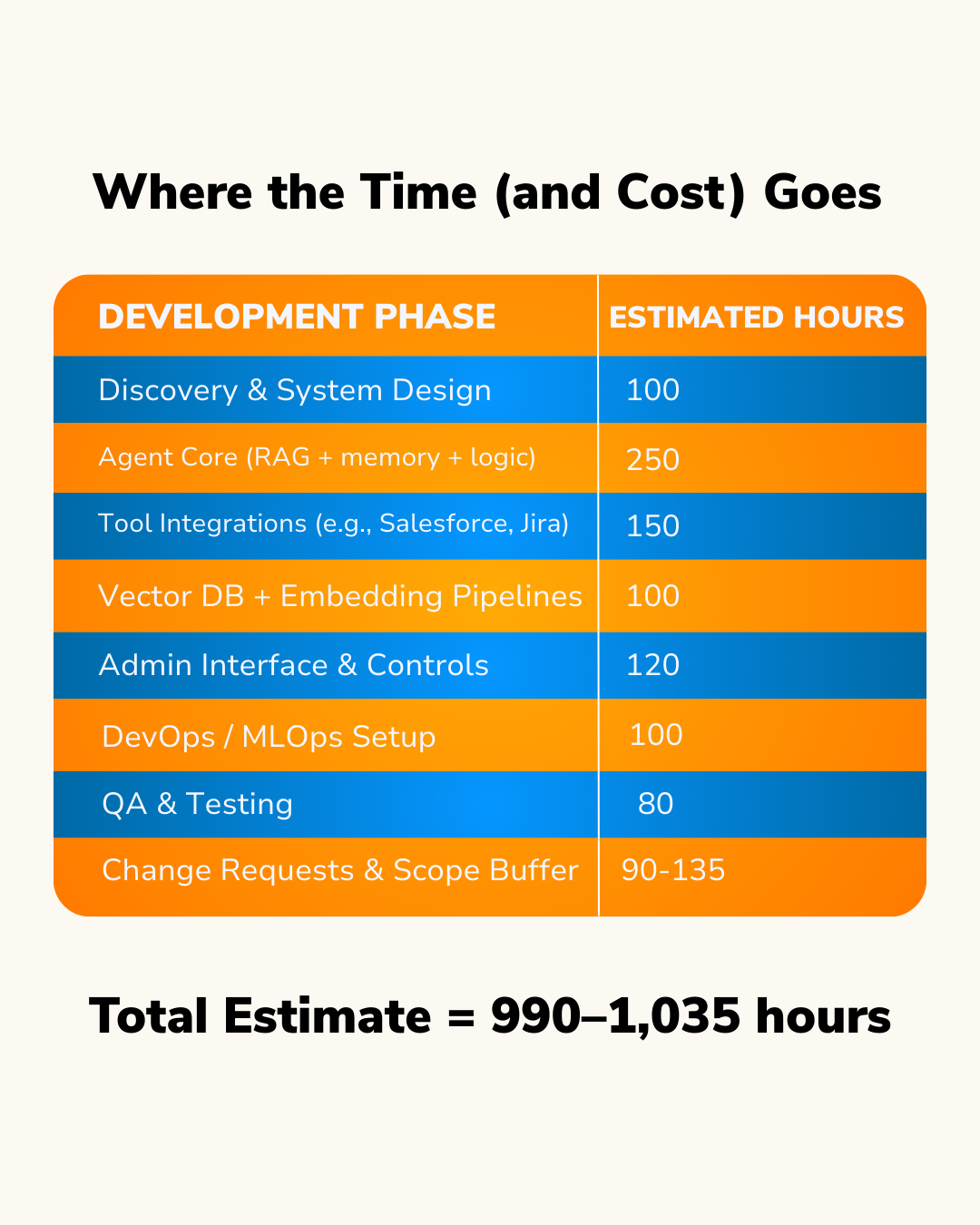
Pro Tip: Ship a "minimum lovable agent" first—focused, functional, and fast to value. This avoids the common pitfall of overbuilding in v1 and helps you measure impact early.
What Are You Really Paying for in AI Agent Development?
Let's break down the costs of creating an AI agent for your operations team. This agent reads files, fetches info from Salesforce and Jira, answers questions, and generates weekly reports.
Here's a typical effort breakdown:
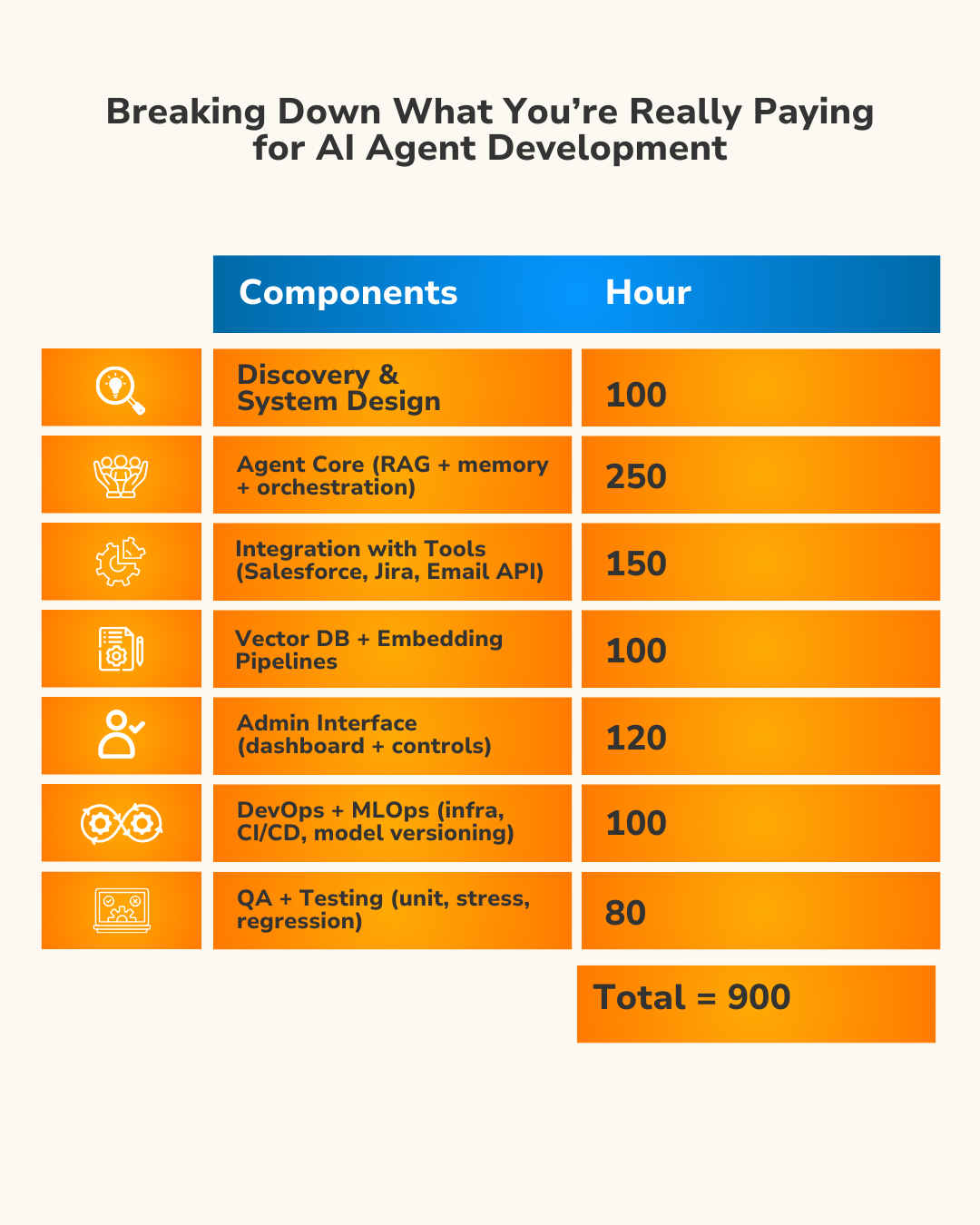
What usually overruns?
- Integration with Tools: API changes or unclear third-party documentation can extend integration time.
- QA & Testing: Real data testing often uncovers unexpected issues that require more work.
- Change Requests & Scope Creep: Agile projects face evolving needs. Setting aside a buffer (90–135 hours here) is wise.
Pro Tip: Aim for a "minimum lovable agent" in the initial delivery phase instead of striving for perfection. This strategy helps avoid the trap of "perfect agent syndrome," where teams endlessly tweak features, often exceeding budgets and timelines.
By anticipating potential overruns and allocating a buffer for changes, you can keep your AI agent development project on track and prevent unexpected issues as you move toward production.
Understanding Regional AI Development Costs
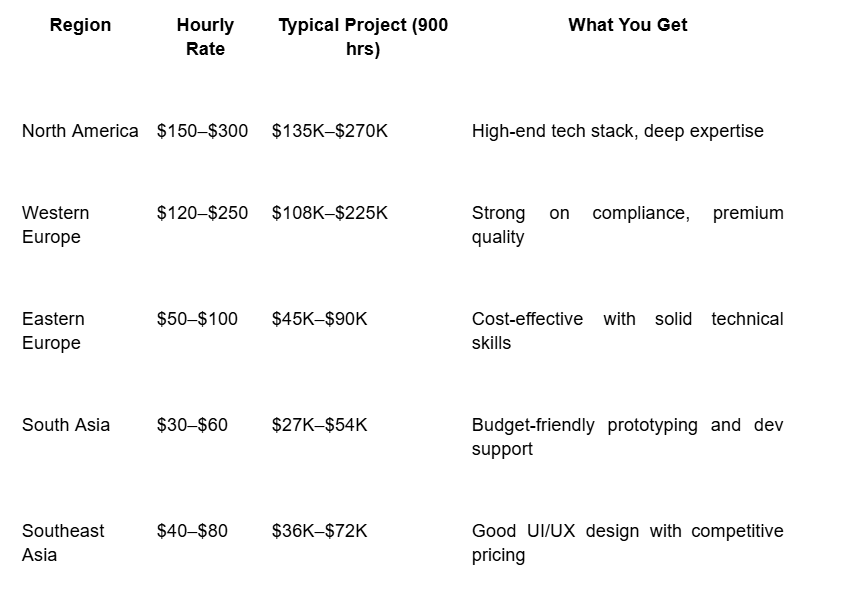
AI agent development costs vary by location, project complexity, and required expertise. Here's a 2025 region-based cost breakdown to illustrate what your investment includes:
Monthly Operational Costs
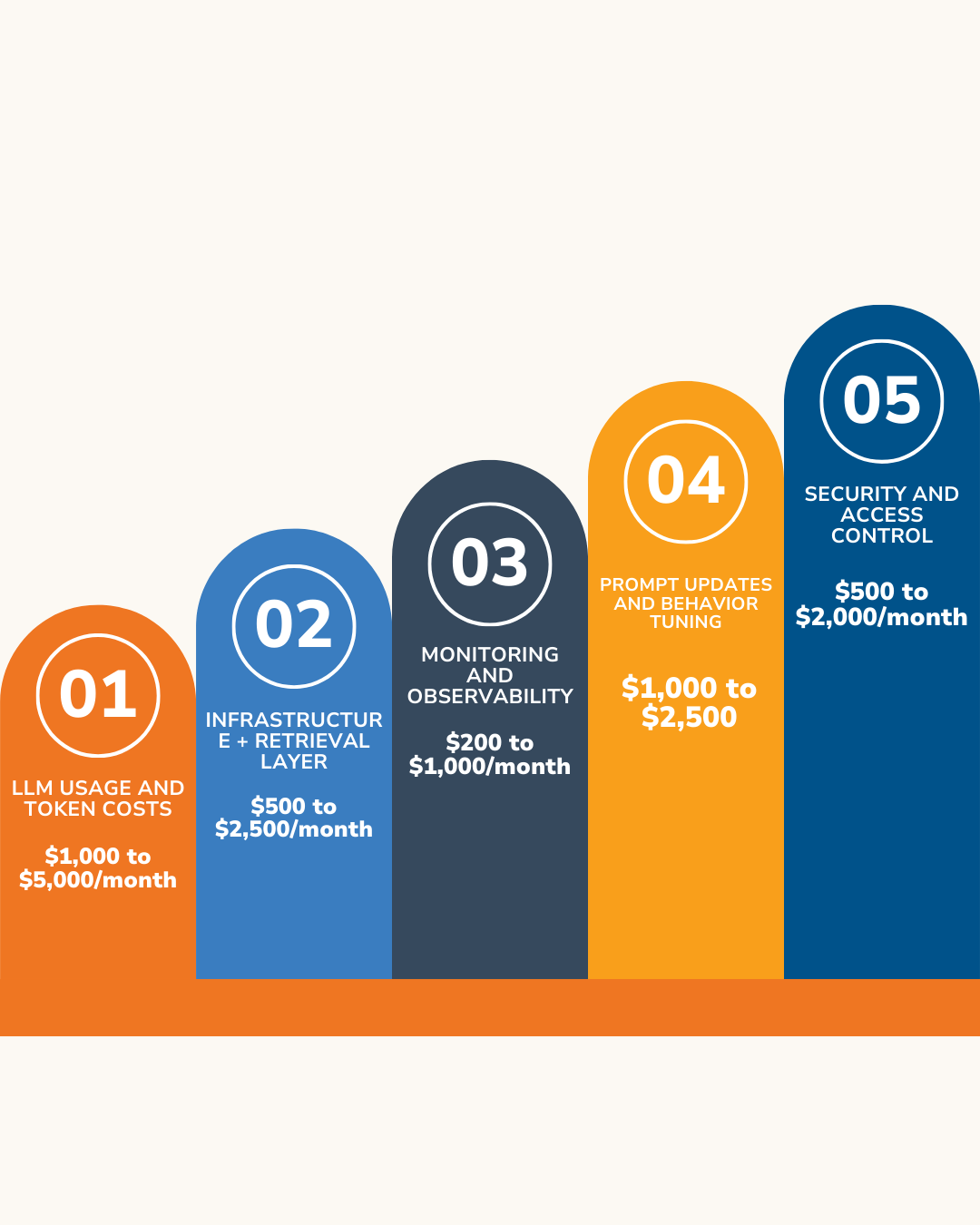
AI agents need regular maintenance to stay accurate, fast, and secure.
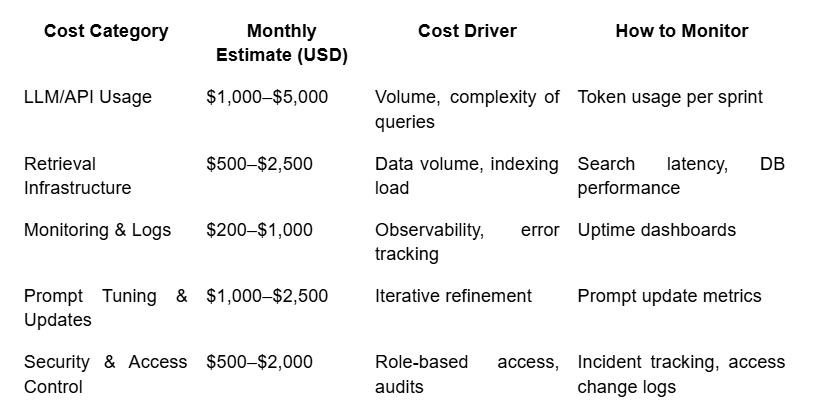
Annual Ops Budget: Expect to allocate 10–18% of build cost per year (e.g., $15K–$27K for a $150K project).
Is $150K a High Price for an AI Agent?
At first glance, $150,000 might feel like a hefty investment—but the return can be swift and substantial when applied to high-impact use cases.
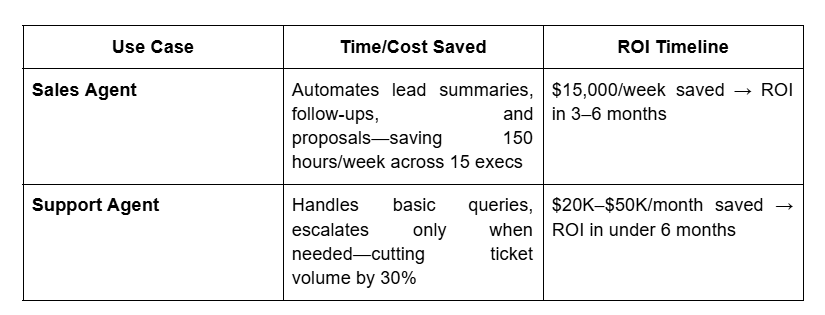
That $150K becomes cost-neutral in months—not years—while improving productivity, morale, and customer experience.
Think Beyond Just Cost
An AI agent doesn’t just reduce expenses—it delivers strategic advantages:
- Faster market response
- Happier, more efficient employees
- 24/7 availability without burnout
- Lower compliance risk via consistent answers
Start with a pilot tied to measurable outcomes. Prove the value, then scale confidently.
How to Keep AI Agent Development Costs Down (Without Sacrificing Quality)?
- Focus on One Task: Start with a high-impact, clearly scoped use case.
- Prototype with Open Tools: Use open-source models (e.g., LangChain, LlamaIndex) early on.
- Use Proven Frameworks: Leverage platforms like Vertex AI Agent Builder to reduce dev time.