Explore Various Testing Methods for Software: A Comprehensive Guide
Are you interested in becoming an expert software tester? If so, it's important to have a good understanding of the various types of testing methods for softwar

Are you interested in becoming an expert software tester? If so, it's important to have a good understanding of the various types of testing methods for softwar
Are you interested in becoming an expert software tester? If so, it's important to have a good understanding of the various types of testing methods for software. In this article, we'll give you an overview of the different types of software tests, testing methods, and what you need to know to become an expert tester!
Software testing is a method to verify whether the actual product matches the requirements and to ensure that the software product is bug-free. It involves the execution of test cases using manual or automated tools. There are different software levels of testing that are performed throughout the software development life cycle. Each level of testing has a specific objective and helps to ensure that the software product is of high quality and meets the customer's requirements.
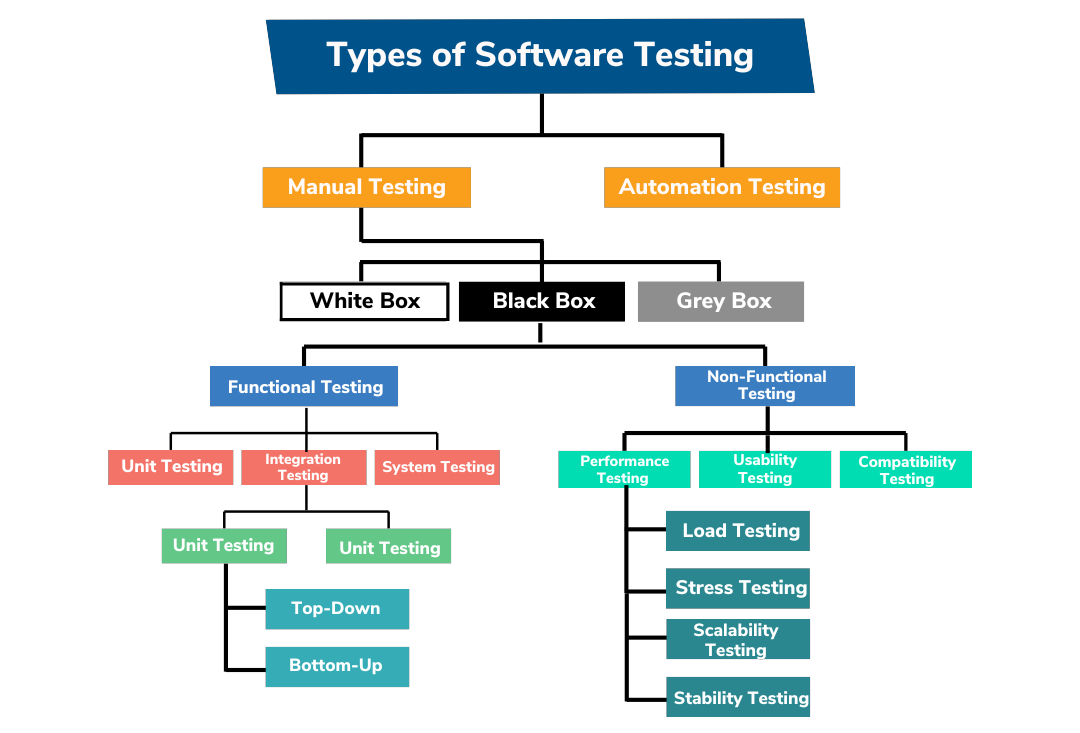
Software Testing Hierarchy
There is a hierarchy of software testing
Testing Methodologies & Techniques
Let’s explore what are testing methodologies.
Testing methodologies are the approaches and techniques used to test software applications. These methodologies help to ensure that the software is functioning as expected and meets the specified requirements.
There are different types of software tests and broadly speaking, the methods of software testing can be classified into two categories: Manual and Automation. It's important to make the distinction between manual and automated tests correctly. Let’s explore what are testing
1. Manual Testing

Manual testing is done in person, by clicking through the application, or by interacting with the software. This is very expensive since it requires someone to set up an environment and execute the tests themselves, and it can be prone to human error as the tester might make typos or omit steps in the test script.
2. Automation Testing

Automated tests, on the other hand, are performed by a machine that executes a test script that was written in advance. These tests can vary in complexity, from checking a single method in a class to making sure that performing a sequence of complex actions in the UI leads to the same results. It's much more robust and reliable than manual tests – but the quality of your automated tests depends on how well your test scripts have been written.
Manual Testing Methods
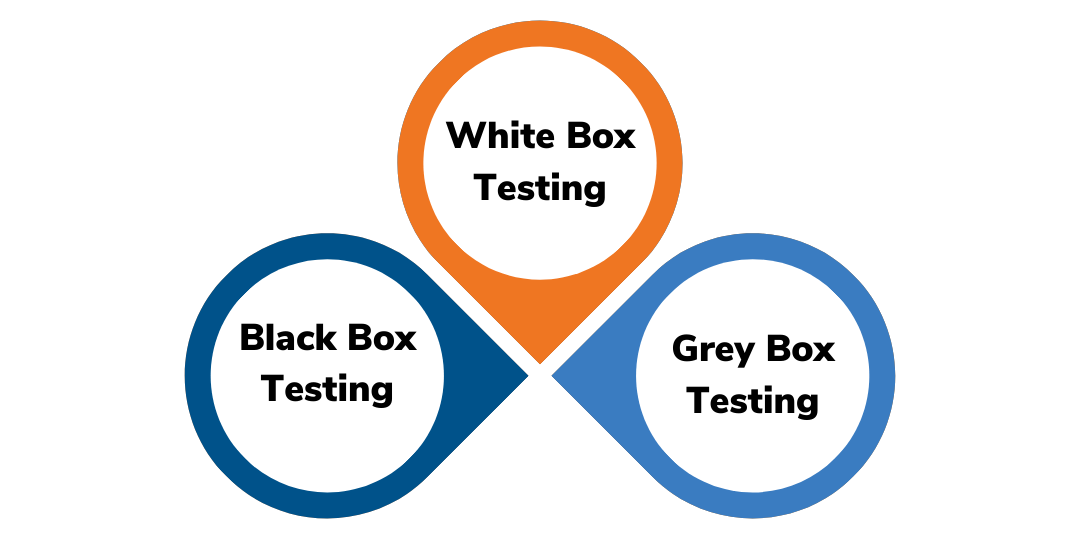
In software testing, manual testing can be further classified into three different types, which are as follows:
- White Box Testing
- Black Box Testing
- Grey Box Testing
1.1 White Box Testing
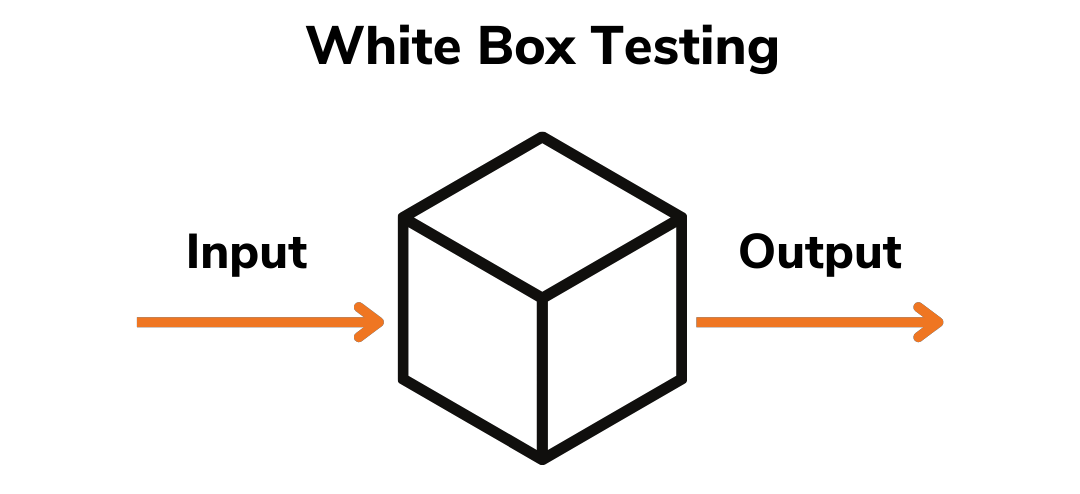
In white-box testing, the developer will inspect every line of code before forwarding it to the QA team. White box testing is also known as open box testing, glass box testing, structural testing, clear box testing, and transparent box testing. This is called White Box testing, as the developer had complete open access to the application and system. The white box tests include:
- Path testing
- Loop testing
- Condition testing and Testing based on the memory perspective
- Test performance of the program
1.2 Black Box Testing
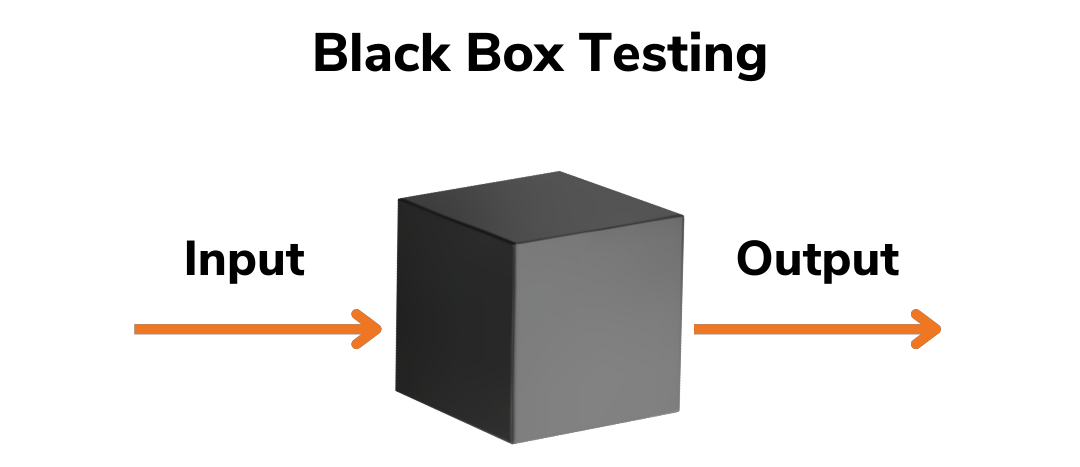
Black box testing is a technique of software testing that examines the functionality of the software without peering into its internal structure or coding. In this method, the tester selects a function, gives an input value to examine its functionality, and checks whether the function is giving the expected output or not. If the function produces the correct output, then it is passed in testing; otherwise, it fails. The test team reports the result to the development team and then tests the next function. After completing the testing of all functions if there are severe problems, then it is given back to the development team for correction. The source code is not visible in this testing; that's why it is known as black-box testing.
1.3 Grey Box Testing
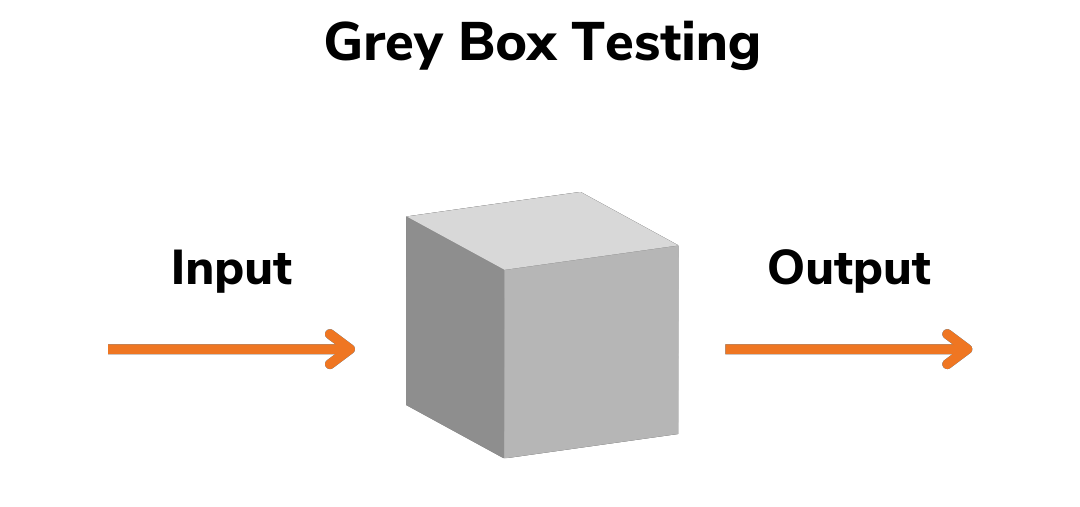
Grey Box Testing is a software testing technique to test a software product or application with only partial knowledge of the internal structure of the application. The purpose of grey box testing is to search for and identify defects due to improper code structure or improper use of applications. In this process, context-specific errors that are related to web systems are commonly identified. It increases the testing coverage by concentrating on all of the layers of any complex system.
In other words, Gray Box Testing is a software testing method, that is a combination of both White Box Testing and Black Box Testing method.
- In White Box testing internal structure (code) is known
- In Black Box testing internal structure (code) is unknown
- In Grey Box Testing internal structure (code) is partially known
Types of Black Box Testing
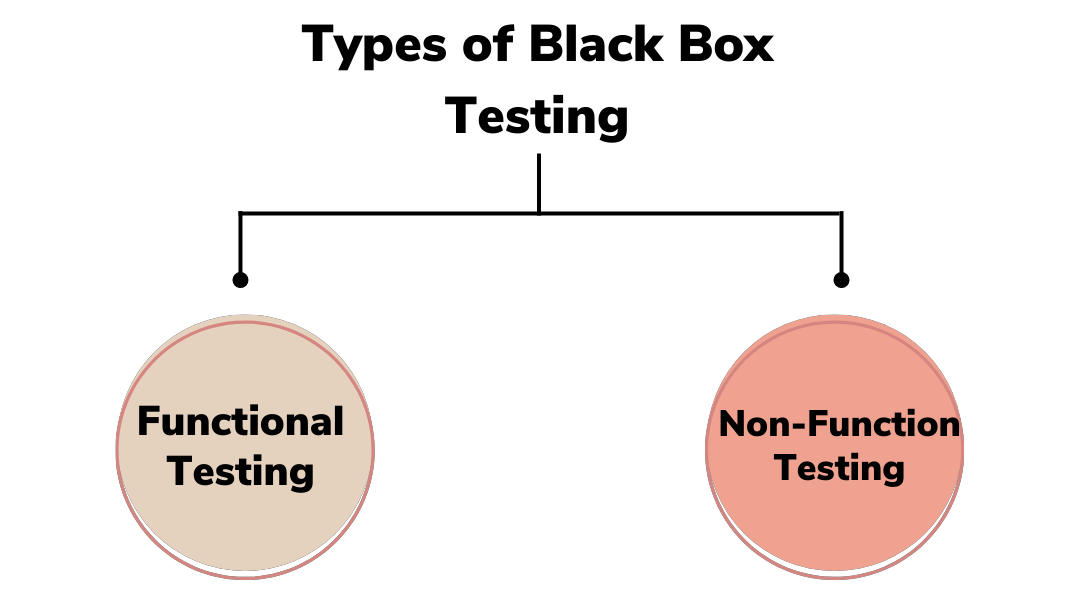
In software engineering, black box testing is an important part of the testing process. Black box testing further categorizes into two types:
- Functional Testing
- Non-function Testing
1.2.1 Functional Testing

The process by which the test engineer will check all the components systematically against the requirement specifications is known as functional testing. Functional testing is also known as Component testing. In functional testing, all the components are tested by giving the value, defining the output, and validating the actual output against the expected value. Functional testing is a part of black-box testing as it emphasizes application requirements rather than actual code. Functional testing is normally performed during System Testing and Acceptance Testing.
Types of Functional Testing
functional testing type
- Unit Testing
- Integration Testing
- System Testing
Unit Testing

Unit test in software engineering is the first level of functional testing needed to test any software. Here, the test engineer will test each module of an application independently, or all the module functionality. This is called unit testing software development.
Some reasons are listed below:
- Unit testing helps testers and developers to understand the base of code which makes them able to change defects causing code quickly.
- Unit testing helps in the documentation.
- Unit testing fixes defects very