SaaS Trends Reshaping Business in 2025: Part 1
In 2023, the global SaaS market was valued at about $273.55 billion. Estimates even suggest that by the end of 2024, it could reach somewhere between $299 billi

In 2023, the global SaaS market was valued at about $273.55 billion. Estimates even suggest that by the end of 2024, it could reach somewhere between $299 billi
In 2023, the global SaaS market was valued at about $273.55 billion. Estimates even suggest that by the end of 2024, it could reach somewhere between $299 billion and $317.55 billion. And by 2025, we might see it soar to around $408.21 billion! Isn’t that something? If you want to stay competitive, it pays to understand SaaS trends.
In this article, we explore SaaS and seven key trends shaping it.
SaaS Market Growth: The Numbers That Matter
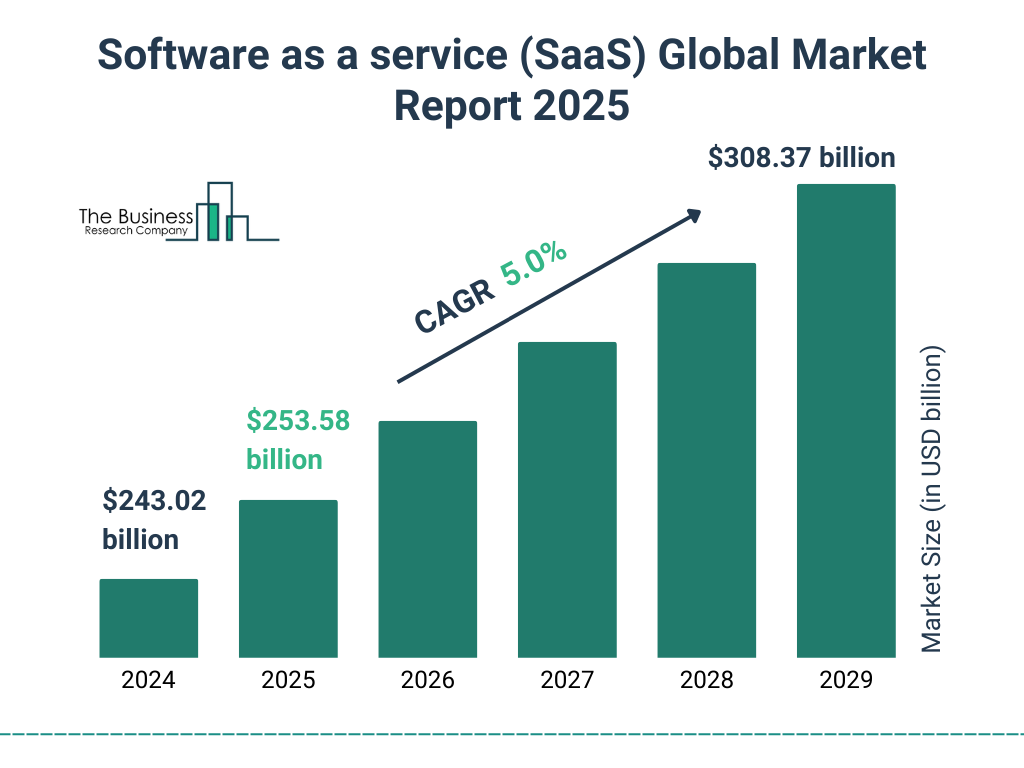
(Source: The Business Research Company)
(The recent growth in the SaaS market highlights a significant uptick in demand, creating many opportunities for businesses. This surge really pushes companies to innovate and offer services that are distinct and appealing. With more players entering the field, competition is heating up, which drives providers to improve their quality and efficiency. On top of that, there’s a great chance for businesses to explore emerging markets, giving them the ability to expand their global presence and diversify their revenue sources.)
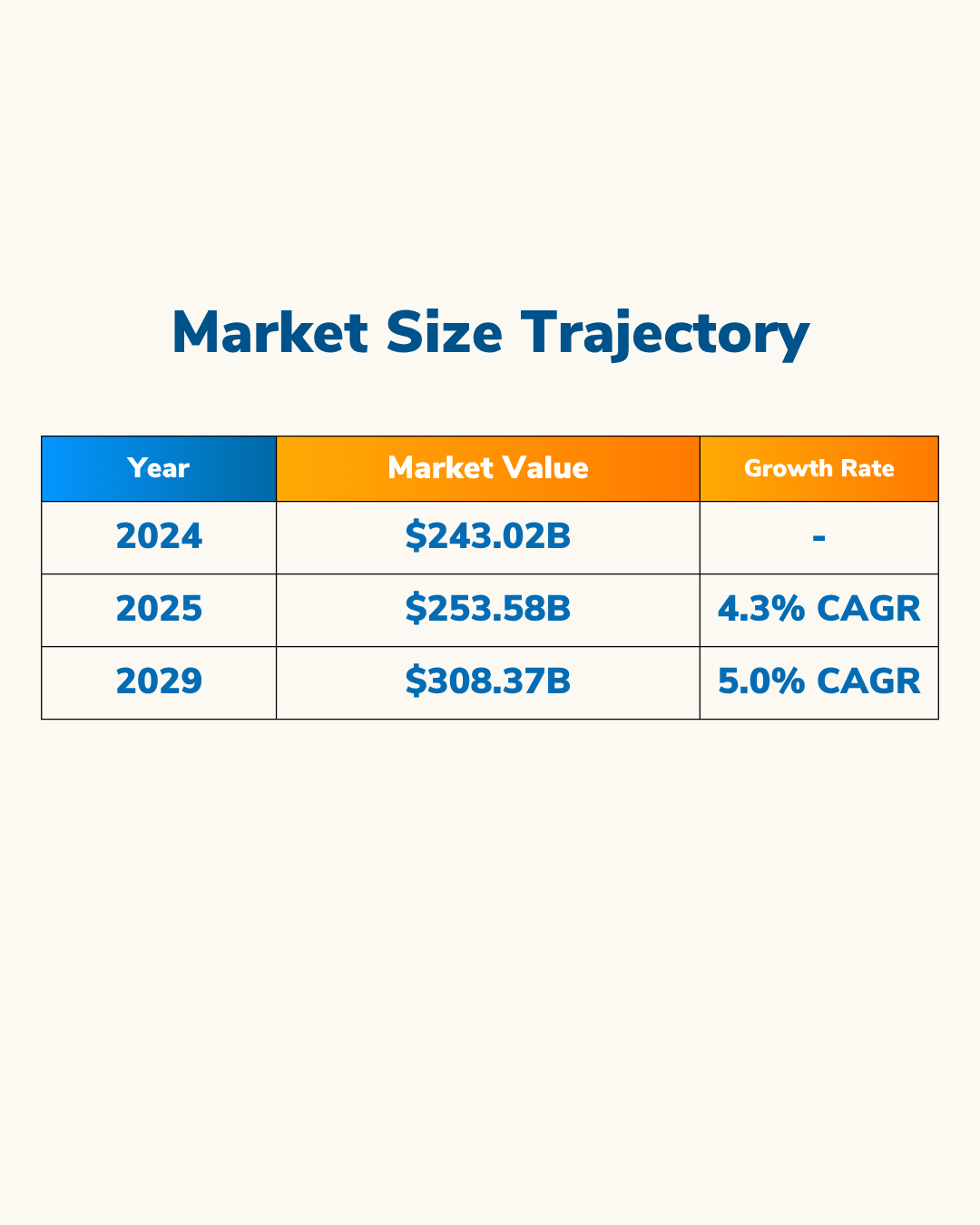
Market Size Trajectory
What's Driving This Growth?
Current Growth Factors (2024-2025):
- A surge in internet access
- Advances in technology
- A push to cut IT infrastructure costs
- Various government initiatives
- The increasing reach of e-commerce.
Future Growth Catalysts (2025-2029):
- IoT technology adoption creating new software needs
- Smart city development requiring integrated platforms
- Post-COVID digital acceleration continuing momentum
The Integration Challenge
“Big companies typically use around 177 SaaS apps, highlighting their need for smooth integration.” – SaaS Statistics and Trends
What this means: Massive need for seamless integration solutions
Major Trends Shaping the Market
- Use of artificial intelligence (AI) to enhance personalization, speed, and security
- A shift towards white label SaaS for tailored solutions that attract clients
- The implementation of centralized analytics to streamline processes
- A focus on mobile optimization
The SaaS market is accelerating, with growth rates increasing from 4.3% to 5.0% as technology adoption deepens across industries.
Trend #1: AI Becomes Essential for SaaS Success

Why AI is Non-Negotiable in 2025
These days, AI is becoming essential for SaaS companies that want to leave a mark in 2025. Businesses are using AI into their day-to-day processes to find useful insights, make better decisions, and foresee market shifts.
How AI Transforms SaaS Operations
Honestly, AI can be a real asset for your team. For example, it:
- Streamlines how your SaaS team operates
- Cuts down on the time spent on repetitive tasks
- Helps create better schedules
- Manages workloads more effectively
- Improves team communication
- Makes working together remotely smoother
“Gartner suggests that by 2025, about 70% of companies will move away from huge datasets to smaller, more manageable approaches, meaning AI will work well even with less data.”
Impact: AI delivers powerful results even with limited data
4 Key AI Applications in SaaS
- Predictive Analytics
- Helps improve customer retention
- Spots accounts at risk in real time
- Intelligent Automation
- Cutts down on manual work
- Lets teams tackle higher-value tasks
- AI-Powered Personalization
- Offers customized experiences to customers
- Gives personalized recommendations
- Amazing User Experience
- Chatbots and conversational AI for 24/7 customer support
- Example: HubSpot uses a chatbot to help generate leads
The E-commerce Connection
AI-driven commerce platforms are revolutionizing customer acquisition for SaaS companies through:
- Behavioral Analytics: Deep insights into user preferences and purchasing patterns
- Personalized Onboarding: Tailored product tours and feature recommendations
- Dynamic Pricing: Real-time optimization based on market conditions and user segments
The effectiveness of these AI applications directly correlates with data quality—companies investing in clean, structured data see 3x better AI performance outcomes.
Future Outlook: The Cost of Inaction
Short-term Consequences (2025-2026):
- Competitive Disadvantage: Manual processes become increasingly inefficient compared to AI-optimized competitors
- Customer Expectations Gap: Users expect AI-powered features as standard, not premium offerings
- Talent Retention Issues: Top performers gravitate toward companies offering AI-enhanced work environments
Long-term Ramifications (2027+):
- Market Share Erosion: Companies without AI integration lose customers to more intelligent competitors
- Scalability Limitations: Manual processes become unsustainable as business volume grows
- Innovation Stagnation: Lack of AI infrastructure prevents adoption of future technological advances
- Acquisition Vulnerability: AI-native companies may acquire traditional SaaS providers at discounted valuations
The Bottom Line: By 2027, analysts predict that SaaS companies without integrated AI capabilities will operate at a 40-60% efficiency disadvantage compared to AI-enabled competitors. The question isn't whether to adopt AI, but how quickly and strategically you can implement it across your operations.
Trend #2: Data-Driven Success: The Foundation of AI

The Challenge:
72% of businesses struggle with scattered data, making consistent customer experiences difficult (Source: Salesforce Study)