What is Drupal Used For and Why Should a Business Use It?
Ever wondered what Drupal is used for and how it matters? Drupal powers 1.7 million websites globally, including 11% of the top 10,000 most-visited sites. It's

Ever wondered what Drupal is used for and how it matters? Drupal powers 1.7 million websites globally, including 11% of the top 10,000 most-visited sites. It's
Ever wondered what Drupal is used for and how it matters? Drupal powers 1.7 million websites globally, including 11% of the top 10,000 most-visited sites. It's the CMS of choice for organizations like Harvard, IBM, and government agencies that need enterprise-level security, complex content management, and scalability. While it requires higher upfront investment than basic CMS platforms, Drupal delivers superior ROI for businesses with complex digital needs, multiple stakeholders, and growth ambitions.
If you've ever wondered what powers some of the world's biggest websites (from government portals to university sites) you've probably encountered Drupal without even knowing it. But what exactly is Drupal used for, and could it be the right solution for your next web project? Let's dive in and explore this versatile platform.
What is Drupal, Really?
Drupal is a free, open-source platform that helps you build and manage websites—but calling it "just another CMS" would be like calling a Tesla "just another car."
Key Insight: Drupal is designed to handle everything from simple blogs to complex enterprise websites with thousands of pages, multiple user roles, and intricate workflows. The best part? It's completely free to download and use, with no licensing fees or vendor lock-in.
What Drupal Powers
Here's something that might surprise you:
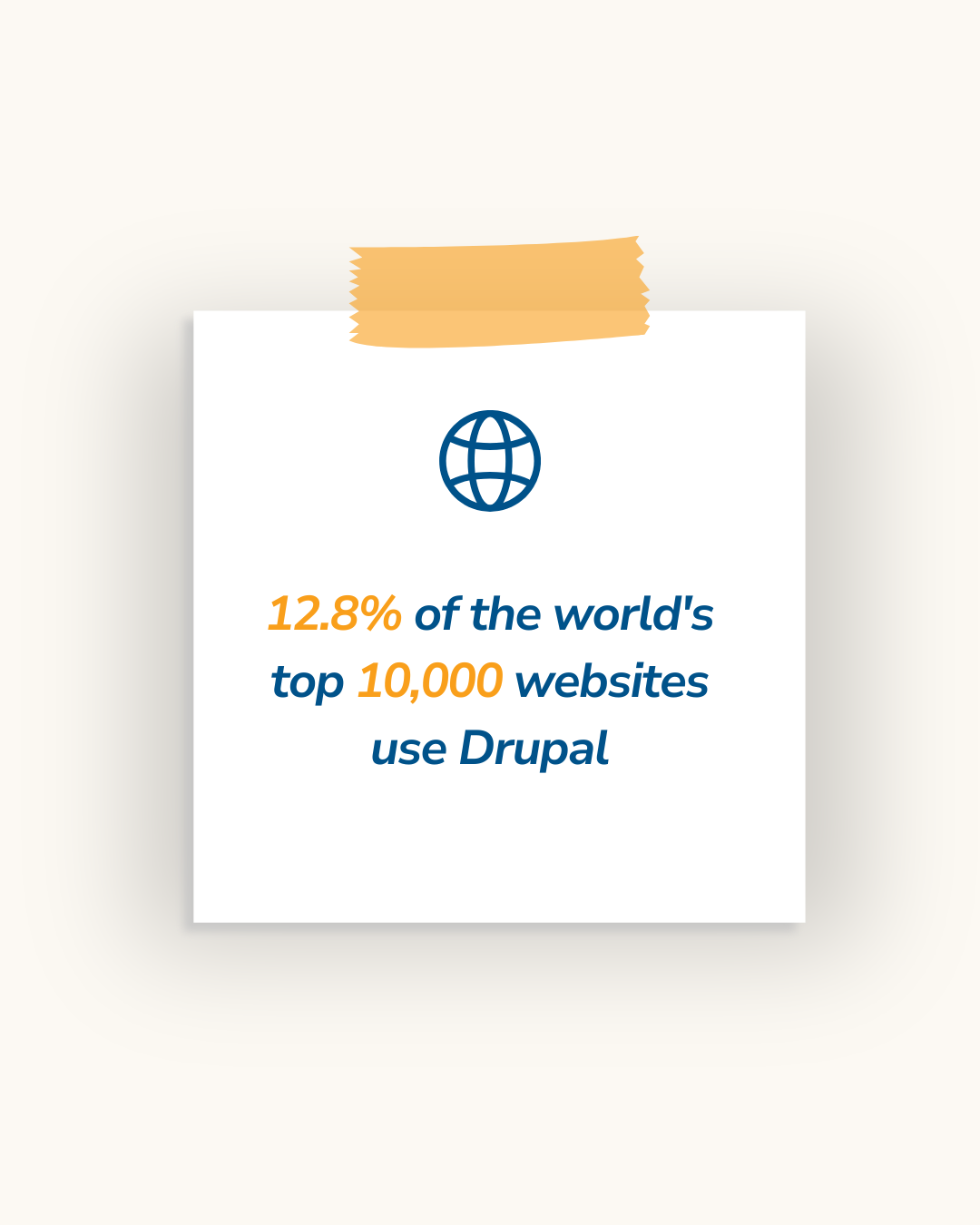
Source: (Global Media Insight (2025)
Currently, there are 1.68 million active websites.
We're talking about household names like:
Government Sites:
- The Government of Australia
- US Internal Revenue Service
Universities:
- Princeton, Harvard
- University of Oxford
Major Corporations:
- IBM, Verizon
- NBC News, The Economist
Nonprofits:
- Doctors Without Borders
- UNESCO
These organizations didn't choose Drupal by accident—they picked it because it can handle their complex needs while remaining flexible and secure.
Core Uses of Drupal

There are core areas for what Drupal is used for. These include:
Corporate Websites and Business Portals
Perfect for multi-departmental corporate sites, customer self-service portals, B2B platforms with restricted access areas, and sites requiring strict brand consistency.
E-commerce and Online Stores
Companies like J.Crew and Canada Goose trust Drupal for unlimited product types, complex pricing rules, enterprise system integration, and multi-site management for different brands.
Government and Public Sector Websites
Government websites need accessibility, security, and massive content handling. Drupal's built-in accessibility features and robust security make it ideal for citizen service portals, public information websites, and multilingual government sites.
Educational Institution Websites
Universities love Drupal for student information systems integration, course management, faculty profiles, and alumni networks with donation systems.
Media and Publishing Platforms
News organizations like The Economist and NBC News rely on Drupal for editorial workflows with multiple approval stages, content scheduling, media libraries, and multi-author collaboration tools.
Nonprofit and NGO Websites
Perfect for donation processing, volunteer coordination, event management, and membership systems—all while staying within budget thanks to Drupal's open-source nature.
Is Drupal Right for Your Business? Quick Decision Guide
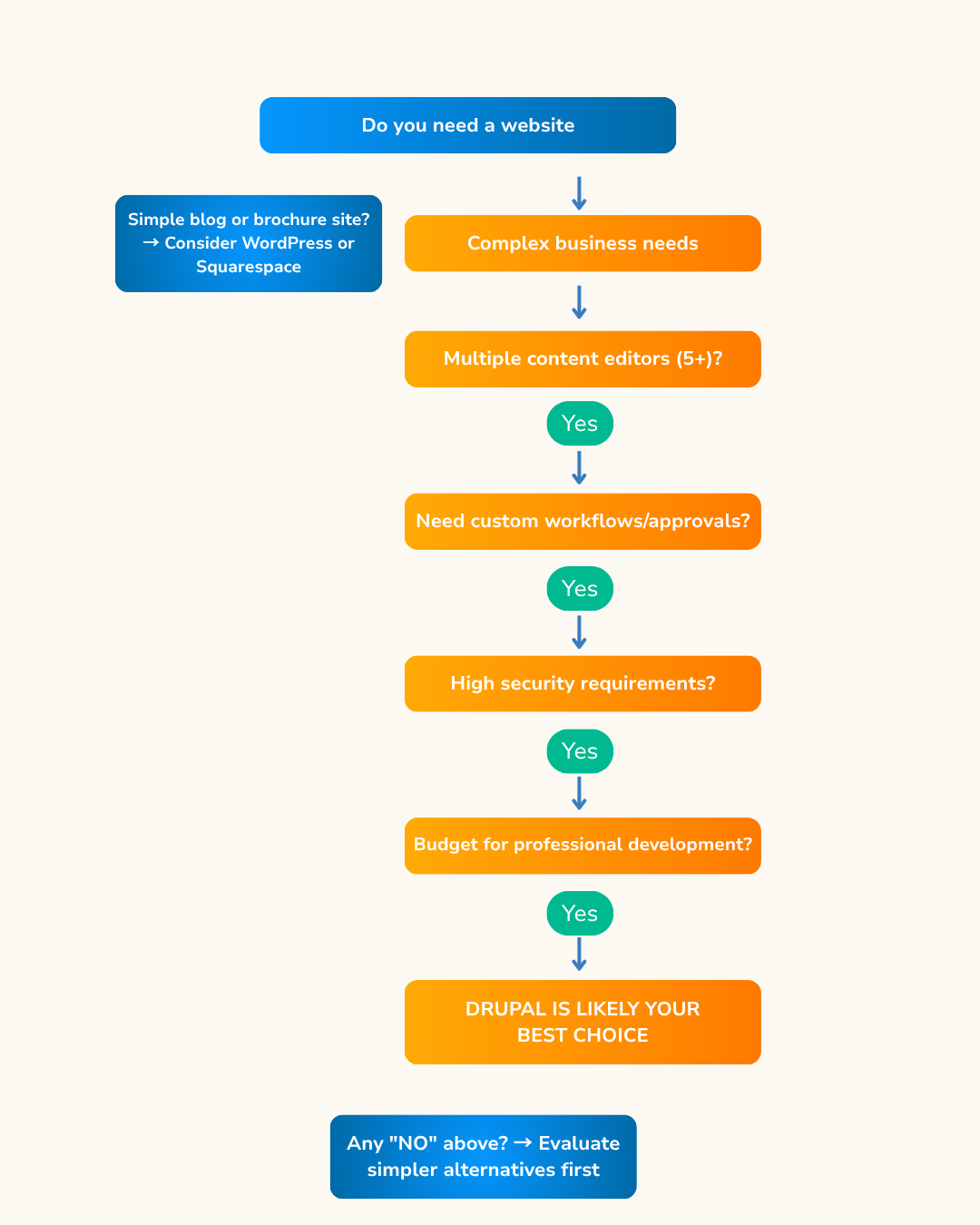
Considering Drupal for your organization? Our team at SJ Innovation has helped nonprofits, corporations, and institutions leverage Drupal's power. Let's discuss your specific needs
When Should You Choose Drupal?
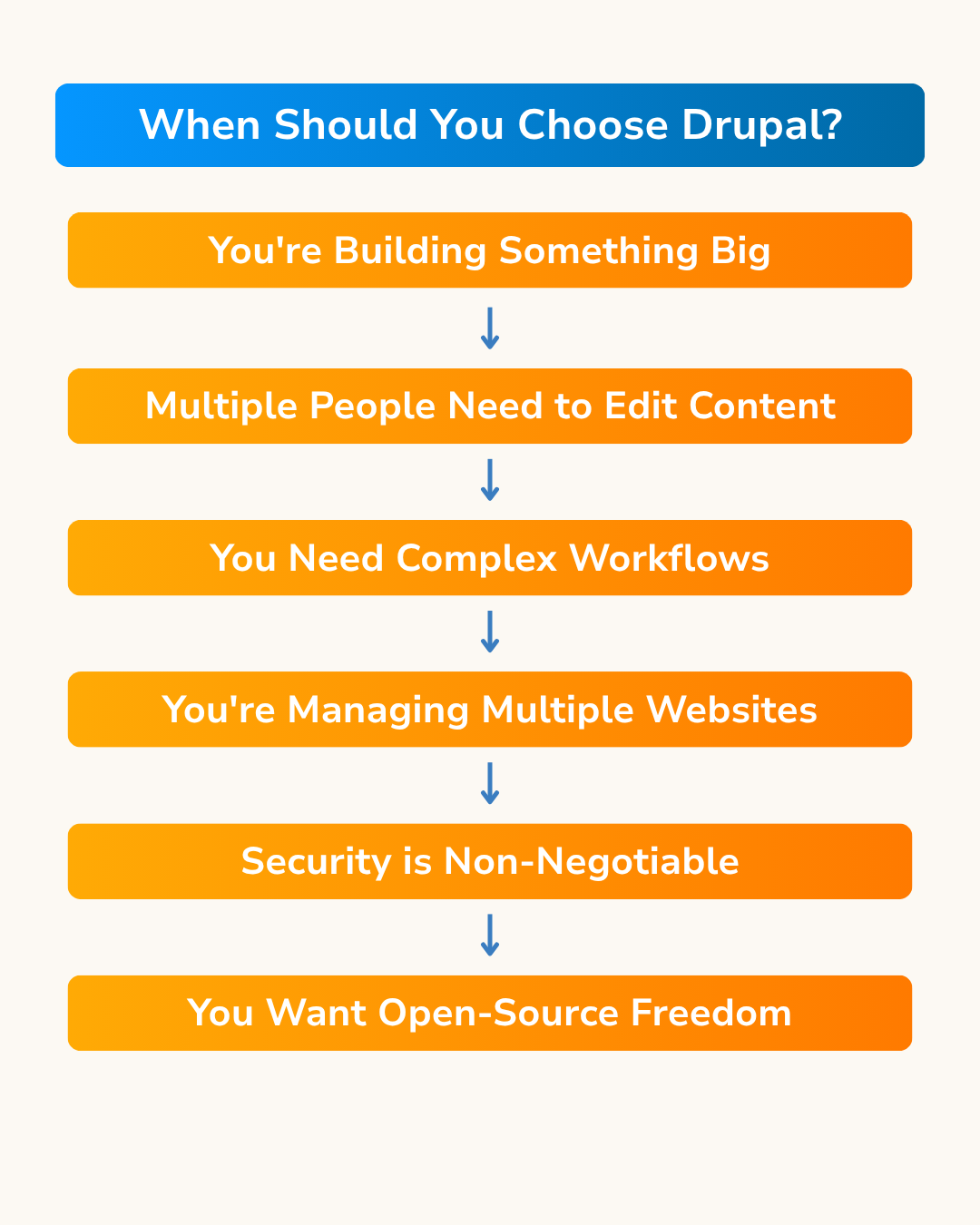
✅ You're Building Something Big
If your website has dozens (or hundreds) of pages.
✅ Multiple People Need to Edit Content
Have a team of 5 or more people who need to create and edit content.
✅ You Need Complex Workflows
Your content goes through multiple stages—draft, review, approval, and scheduled publishing.
✅ You're Managing Multiple Websites
Want to run several related websites and need to share users, media, or content.
✅ Security is Non-Negotiable
For organizations handling sensitive data or requiring high security standards.
✅ You Want Open-Source Freedom
No vendor lock-in, no licensing fees, complete control over your code.
Getting Started: Is Drupal Right for Your Project?
Now that you know what Drupal is used for, honestly assess your needs:
Drupal is probably right if you need:
- Complex content types and relationships
- Multiple user roles with different permissions
- Integration with other business systems
- High security and compliance requirements
- Scalability for future growth
You might want to consider alternatives if you need:
- A simple blog or basic business website
- Something up and running in a few days
- Minimal ongoing maintenance
- A very tight budget for development